
What Happens When Looking for Threats Becomes Your Job?
So we have spent two posts talking about threats and barely any mention of the folks doing the looking!
Now lets begin, the absurdity of life brings opportunities and with those opportunities come threats, now threats have been discussed from a security point of view, now security in its current definition is the authority of being protected from harm, danger, and/or loss along with actions that help keep people, assets and places safe.
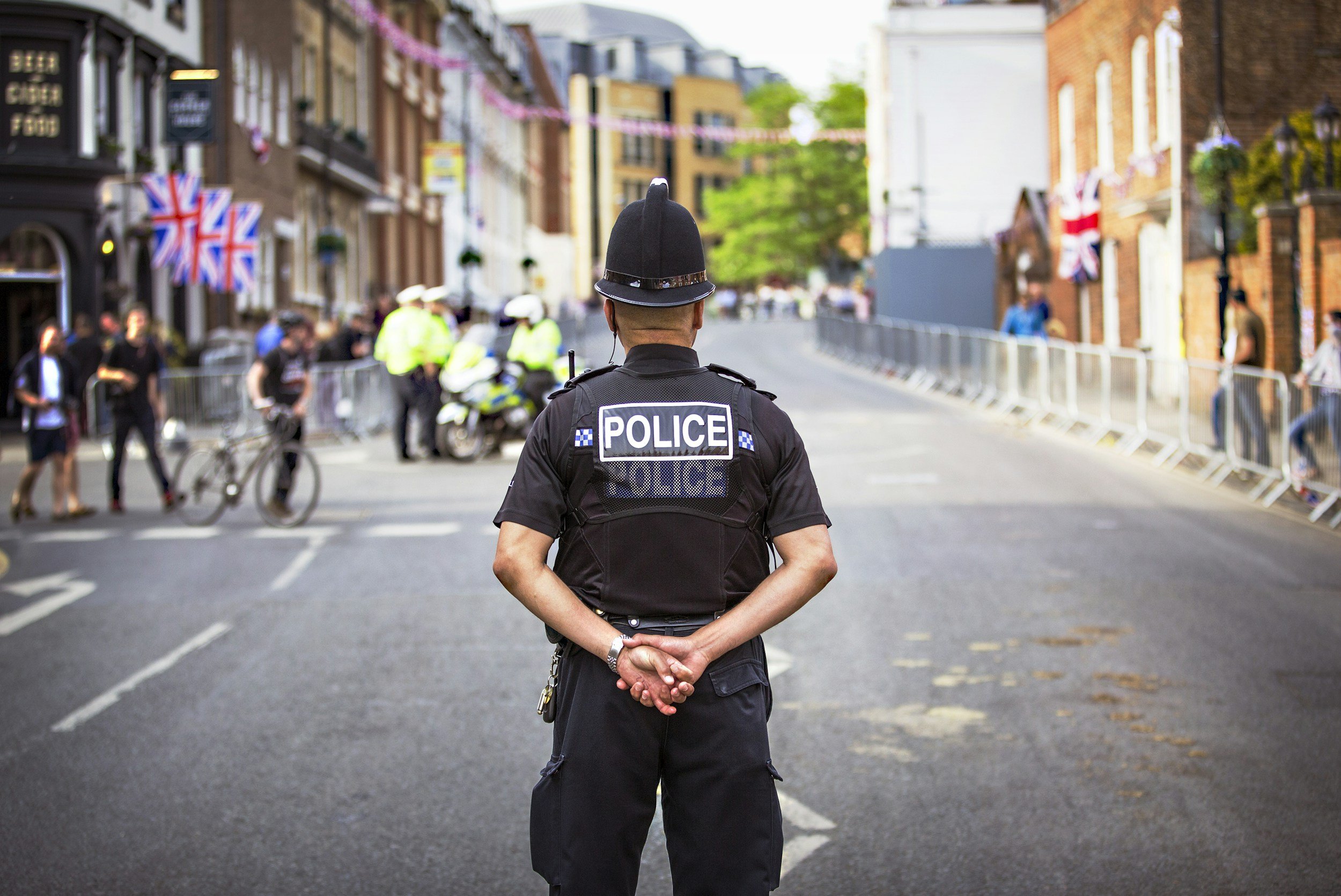
This short paragraph goes some way towards covering an entire domain of specialism around Security, but i barely touch the surface with it.
Police, Intel Analysts, Soldiers, Security Guards, Emergency workers, Abuse investigators, Fraud investigators, Journalists, Parents, Teachers. I could list many, many more but, its boils down to anyone who’s environment teaches them to anticipate and protect from what is considered a dangerous facet of society.
What does repeated exposure to threats, or the perception of threats do to the human perception? We’re in a state of mind of attempting to identify threats because “i am paying attention because SOMETHING may require my attention”. That is broadly the explanation as to what constitutes threat perception. In my original blog i mentioned the progression of a threat in which a few stages follow each other, this progressive state is covered below as follows:
normal → unusual → suspicious → malicious → threat
There exists a framework of analysing how observations transition from a harmless anomaly into an active threat and it is rooted in a cross-disciplinary approach. It synthesizes work from behavioral threat assessment, criminology (hostile reconnaissance), and modern User and Entity Behavior Analytics (UEBA).
I recommend The American Psychological Association's Threat Assessment Guide, or this fantastic post on Linkedin by Stephanie Schilling. Both cover in detail the escalations involved in threat detection in the human mind, and its impacts on society and the human race.
In the very many books, journals, blogs and comments i’ve read in my search for some answers there is one clear response and this is the human brain does not wait for certainty. It will make decisions with incomplete decisions. A flaw? perhaps, or is this “human nature”, to operate to keep itself safe, and others?
Signal detection Theory
Signal detection theory is a theoretical framework for understanding how decisions are made under uncertainty. It applies whenever judgments must be based on noisy, imperfect evidence—such as deciding whether a faint stimulus was present, whether a face was seen before, whether a medical test result indicates disease, or whether a defendant is guilty. In such situations, observed accuracy reflects not only how well evidence from two states of the world can be distinguished (discriminability) but also how decisively or cautiously the decision maker sets their criterion for responding (response bias). Signal detection theory (SDT) provides principled measures that separate these two components, allowing performance to be conceptualized and quantified in a theoretically coherent way. Although the core ideas underlying SDT date back more than a century, they remain essential today because intuition and simple accuracy measures based on alternative theories often confound sensitivity and bias, leading researchers to draw misleading conclusions.
Source: https://oecs.mit.edu/pub/608a12kc/
The one line here that i’d like to talk about is the the following:
It applies whenever judgments must be based on noisy, imperfect evidence—such as deciding whether a faint stimulus was present
Which is a concept i alluded to, is that the our brain is making decisions for us in some respects, and those who operate under threatening environments appear to be in this continual state in some cases, however the five stages of escalation unfortunately then include a new stage of escalation:
normal → unusual → attention → concern → danger
A very simple analogy here is we don’t wait for a burglar to break into our home before calling the Police, or let our children roam into the motorway near our homes, we have security measures. We’ve got CCTV, we have traffic operations designed to prevent cars injuring us.
However, what happens to the people who’s job it is when all they are paid to do is keep you, assets, places things safe? Their vigilance is their normal, yours and my brains vigilance is a anticipatory response learned from danger such as:
“I witnessed something very very bad yesterday” - not a Emergency Worker
versus
'"I witnessed several very, very bad things today, and i will witness several very, very things tomorrow, and the day after” - an Emergency Worker
This is where i’ve found through my own personal experience the brain changes, i am not a Dr of the Brain and i will never claim to be accurate, but … i will say that once the human brain goes through consistent and often persistent traumatic events, a development occurs in the brain, and this has a definition has a name.
This is called hypervigilance.
The brain has grown from being vigilant to threats, onto being persistently vigilant for threats, what was once non-normal, now has been the normal. A very brief definition of this is my brain never switches off from being vigilant, always looking for the next threat because my brain was trained to, traumatic event after event, my brain decided this state was the defacto and decided to stay that way.
What does this feel like?
Looking for patterns to identify threats
Difficulty understanding a lack of threats in common places
Pathways of scenarios
Constantly being aware of surroundings
Unable to know the differences between safety and danger
Noting behavior in things others don’t or can’t see.
There is a rule known as 55/38/7.
The 55/38/7 formula describes how much of communication is nonverbal: 55% through body language, 38% through tone of voice, and only 7% through spoken words. But the 90% figure wasn’t plucked out of thin air. It was Albert Mehrabian, a researcher of body language, who first broke down the components of a face-to-face conversation. This is where the idea that most communication is nonverbal originated.
Source: https://online.utpb.edu/about/articles/communication/how-much-of-communication-is-nonverbal/
The point here being being able to accurately pick up on non-verbal cues would be an excellent skill to have as an abuse investigator, or a Lawyer trying to understand why someone harmed another person, or a Police Officer investigating an alleged incident.
At this point we’ve covered and reached the point of covering “What Does a Threat Look Like?”, and “Who Gets to Decide What Is a Threat?”, this blog covers, “What Happens When Looking for Threats Becomes Your Job?. The next blog will “When Does the Threat-Detection System Switch Off?” in which i will cover the concepts of vigilance, hypervigilance, and the difficulty of switching off when it no longer requires constant horizon scanning.